Paul R. Ehrlich obituary: Co-evolution pioneer who predicted overpopulation would cause famine
Obituary: Paul R. Ehrlich (1932–2026) Co-evolution pioneer who predicted overpopulation would cause famine.
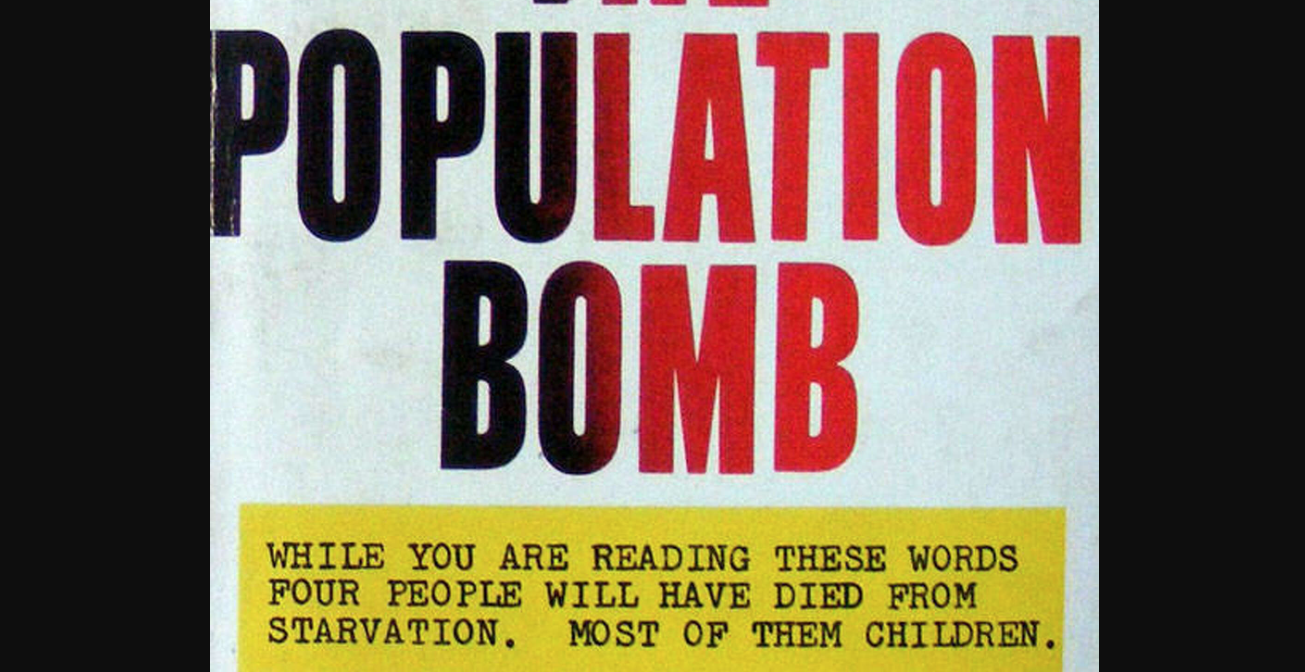
Paul R. Ehrlich’s book The Population Bomb (1968), written with his wife Anne, made him one of the most influential, if controversial, scientists of the twentieth century. In it, he alerted the public to the possible problems of global overpopulation, including the depletion of natural resources and the deterioration of the environmental systems that support humanity. But his overemphasis on population growth at the expense of other factors also influenced oppressive policies in some of the world’s most populous countries, and has not proved to be justified. Ehrlich has died, aged 93.
Ehrlich was born in Philadelphia, Pennsylvania, and attended Columbia High School, a highly-rated state school in Maplewood, New Jersey. Butterflies were the childhood passion that drove him into science. Sure of his interest in moths and butterflies, at 15 years old, he joined US-based Lepidopterists’ Society.
After earning a zoology degree at the University of Pennsylvania in Philadelphia and then a master’s and PhD in entomology at the University of Kansas, in 1959, Ehrlich secured a post at Stanford University, California. He became a full professor in 1966, after he published his most important work — a 1964 paper with botanist Peter Raven on plant and butterfly co-evolution, a concept they pioneered (P. R. Ehrlich and P.H. Raven Evolution 18, 586–608; 1964).
The pair suggested that it was because of butterflies that many until-then unexplained chemical compounds in plants were “immediately explicable”. For instance, when milkweed butterflies extended their range after evolving such that they could feed on dogbanes (Apocynum spp.) and milkweeds (Asclepias spp.), scientists hypothesised that the plants’ bitter glycoside and alkaloid compounds were helping the animal avoid predation. Unsurprisingly research since then has found that there are more important factors in butterfly-plant interaction patterns, but work in this field is often influenced by this seminal paper.
Ehrlich and Anne wrote The Population Bomb in the months after they visited Delhi in 1966. Its publication in May 1968 brought Paul into the public eye. He was labelled a ‘population nut’ and accused of hating children and being ignorant of human creativity. Undeterred by death threats, The Race Bomb was published in 1977, and included arguments against racial theories of intelligence. The same year, Stanford appointed him Bing Professor of Population Studies, and he remained at Stanford for the rest of his career.
The Ehrlichs’ work on population had a profound impact on society. It encouraged mass sterilization programmes in India and the one- child policy in China, and influenced how children everywhere were viewed and valued. Ehrlich did not express regret over any of this, even much later in his life.
More positively, The Population Bomb helped to encourage the availability of contraception worldwide and the right of women to control their fertility, including through abortion, leading to improved health and well-being.
Ehrlich was not good at mathematics. He joked that he “had trouble counting to eleven without taking off [his] shoes”. He famously lost a bet with the US economist Julian Simon that the prices of certain raw materials would rise: all five of those that Ehrlich selected fell in price.
This lack of mathematical acumen did not hold back his career, but it did affect his work. In 1971, the journal Science published an article by Ehrlich and environmental-policy specialist John Holdren that said that I = PAT, where I is negative impact on the environment, P is population, A is affluence (defined as how much the average person in society consumes) and T is technology, a correcting factor for the mitigating effect of technology and social arrangements, such as switching to solar panels or using public transport (P. R. Ehrlich and J. P. Holdren Science 171, 1212–1217; 1971).
The I = PAT equation suggests that human population must be controlled. However, others quickly explained that if C is total consumption, then A = C/P, and thus the equation becomes I = P × C/P × T. Broken down, this equates to I = CT, indicating that the negative impact of people on the planet is proportional to their total consumption, modified by how well they mitigate that consumption. It has nothing to do with population numbers.
The Ehrlichs themselves, arguably, focused little on controlling consumption, and were inveterate travellers. Ehrlich said that one of the saddest days of his life came when he had to give up his private plane owing to the escalating costs of insurance. In his 2023 autobiography Life, he explained that he and his wife did not feel not guilty about the greenhouse-gas emissions from flying so much because they deliberately limited themselves to having a single child, “when we would have loved to have two”. They did this because he had read an estimate suggesting that having one less child was the same as 24 people giving up their cars.
Ehrlich was a showman, he was a regular on US television programme The Tonight Show Starring Johnny Carson. His all-time favourite article, for sentimental reasons, he said, was the ‘Economic Value of Tropical Forest to Coffee Production’ (T. H. Ricketts et al. Proc. Natl Acad. Sci. USA 101, 12579–12582; 2004).
His greatest positive achievement, alongside encouraging women’s access to contraception and abortion, was to have helped to create the field of co-evolution. Plant ecology textbooks now include a section on herbivory and the co-evolution of plants with plant-eaters. His main contribution to population studies and demography was arguably to spur others to explain why other people are not the biggest problem.
For a PDF of this Author Manuscript and a link to publication on-line click here.
A part of the cover of the most famous book